Shaping decarbonisation together!
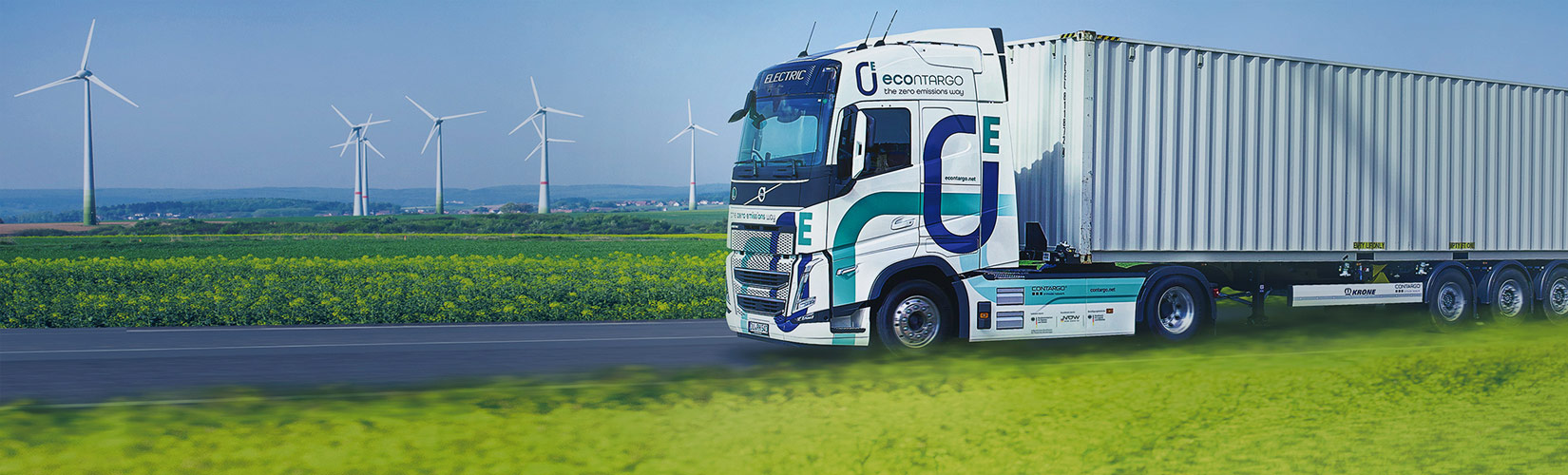
We offer our customers fully electric transport services in many regions of Germany and France. We continuously incorporate the experience gained over many years into the targeted and ongoing expansion of our e-truck fleet.
E-trucks and charging infrastructure
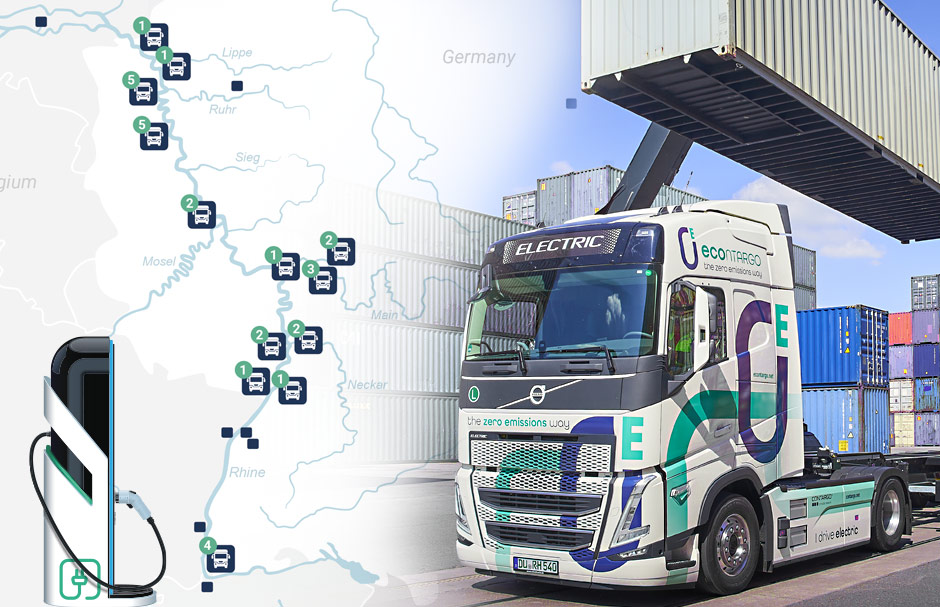
A strong combination: as we expand our e-truck fleet, we are also investing in the appropriate charging infrastructure. This creates the conditions needed to deploy battery-electric 44-tonne trucks in container transport. Our charging infrastructure network is continuously being expanded and integrated into the operations of our container terminals through intelligent energy management. The experience gained is continuously incorporated into the further development of our electric transport solutions.
Overhead line hybrid trucks
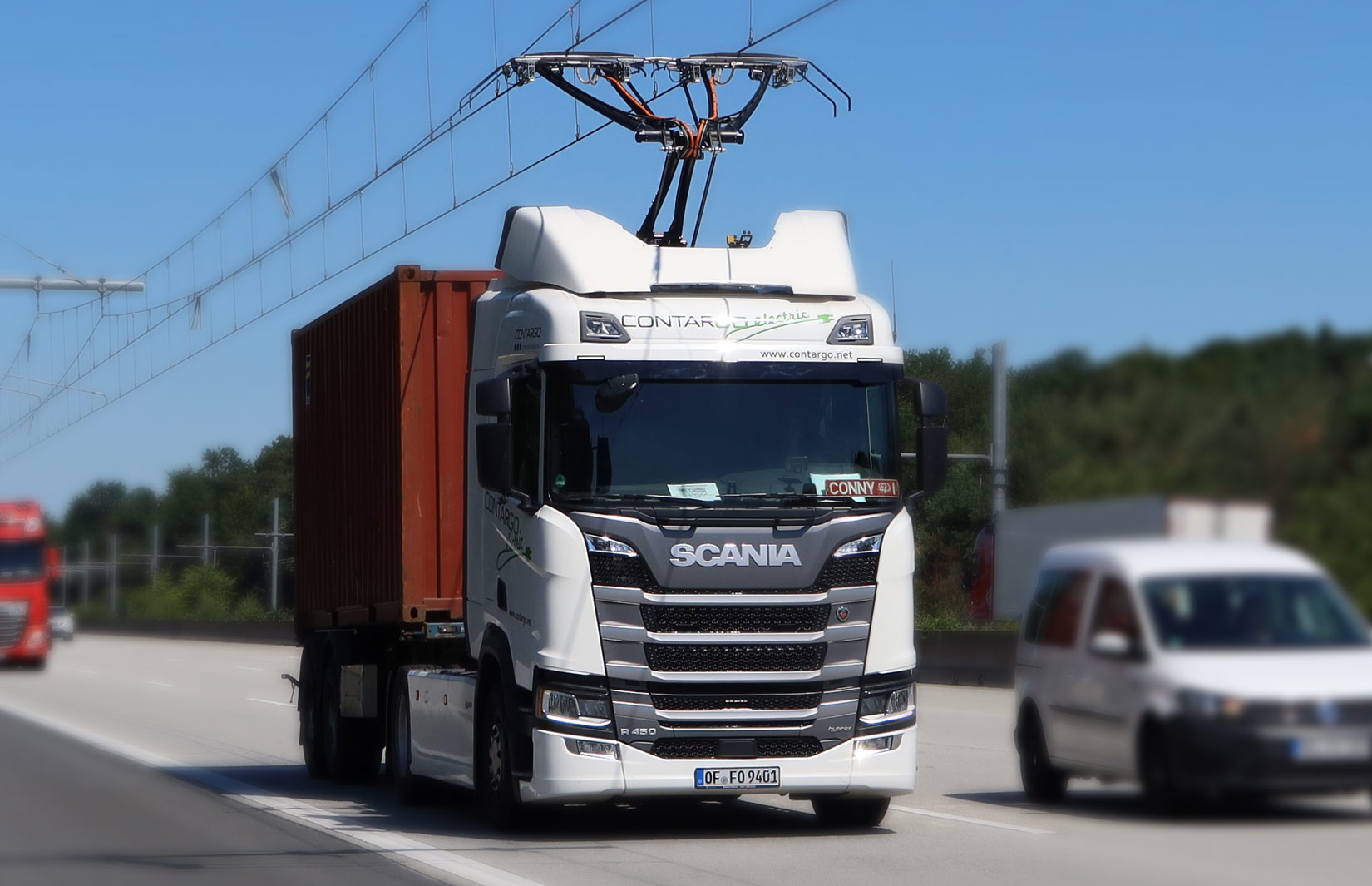
We started off with the "El Fondo". This truck had a small battery. With Hildegard, we're now driving trucks with a 99 kW battery which can also be charged by being plugged in as well as via overhead lines. We soon hope to have a fully electric tractor-trailer which can be dynamically charged via overhead lines and statically topped up with electricity at charging columns.
CONTARGO & the ELISA project
ELISA stands for "Elektrifizierter & Innovativer Schwerverkehr auf Autobahnen" – electrified & innovative heavy goods traffic on motorways. The project was conceived in order to test out an electric motorway system in real-life conditions. It's a great idea, since overhead line hybrid trucks have a range of advantages:
Complete flexibility
It makes a lot of sense on the main axes to guarantee flexibility in our sector through dynamic charging when on the road. This is beneficial for drivers, important for planners, and also for stabilising the grid, because energy is evenly distributed. Flexible hybrid drive also means drivers do not depend on public charging infrastructure and that they do not have to worry about any larger conversions in operations.
24-hour operations
When delivering or unloading goods (which takes approx. 30 min, or as much as 2-3 hours in the container sector) there are additional ideal interim charging opportunities. This means that an e-truck can theoretically keep running for 24 hours.
Twice the savings
In comparison with other technologies, such as fuel cell trucks and LNG trucks, overhead line hybrid trucks reduce emissions even further while offering cost benefits for users.
Smart energy management
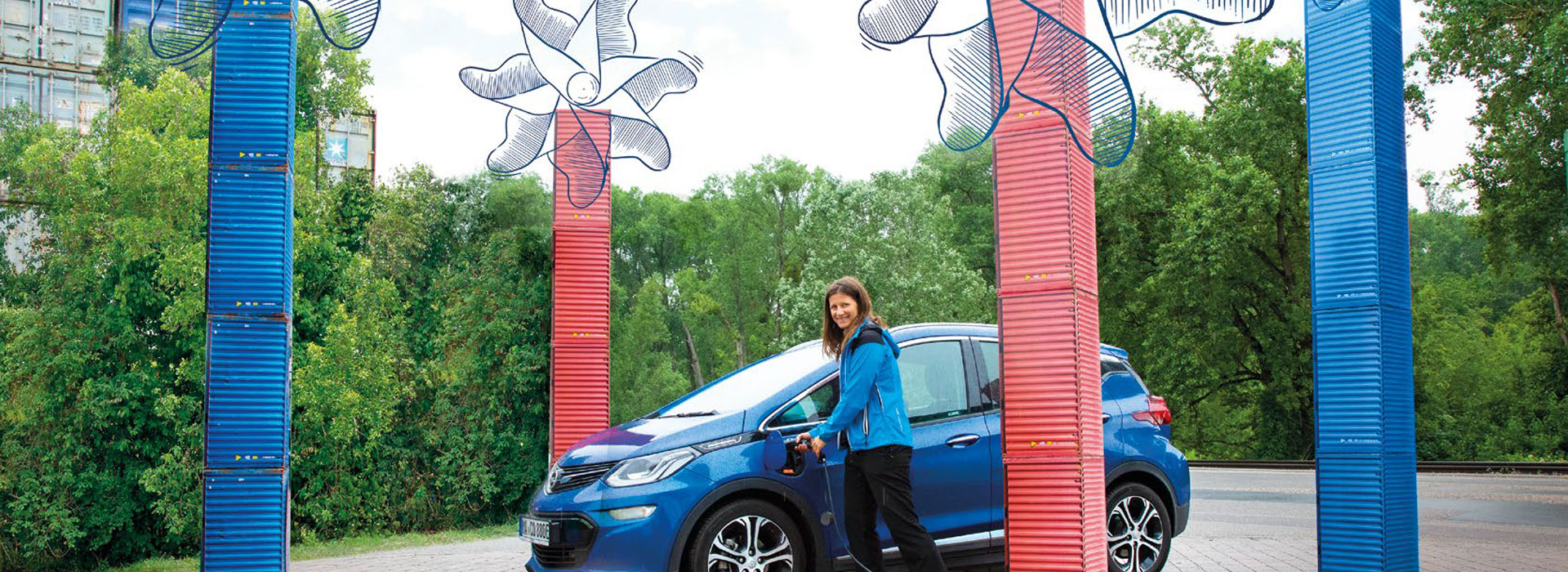
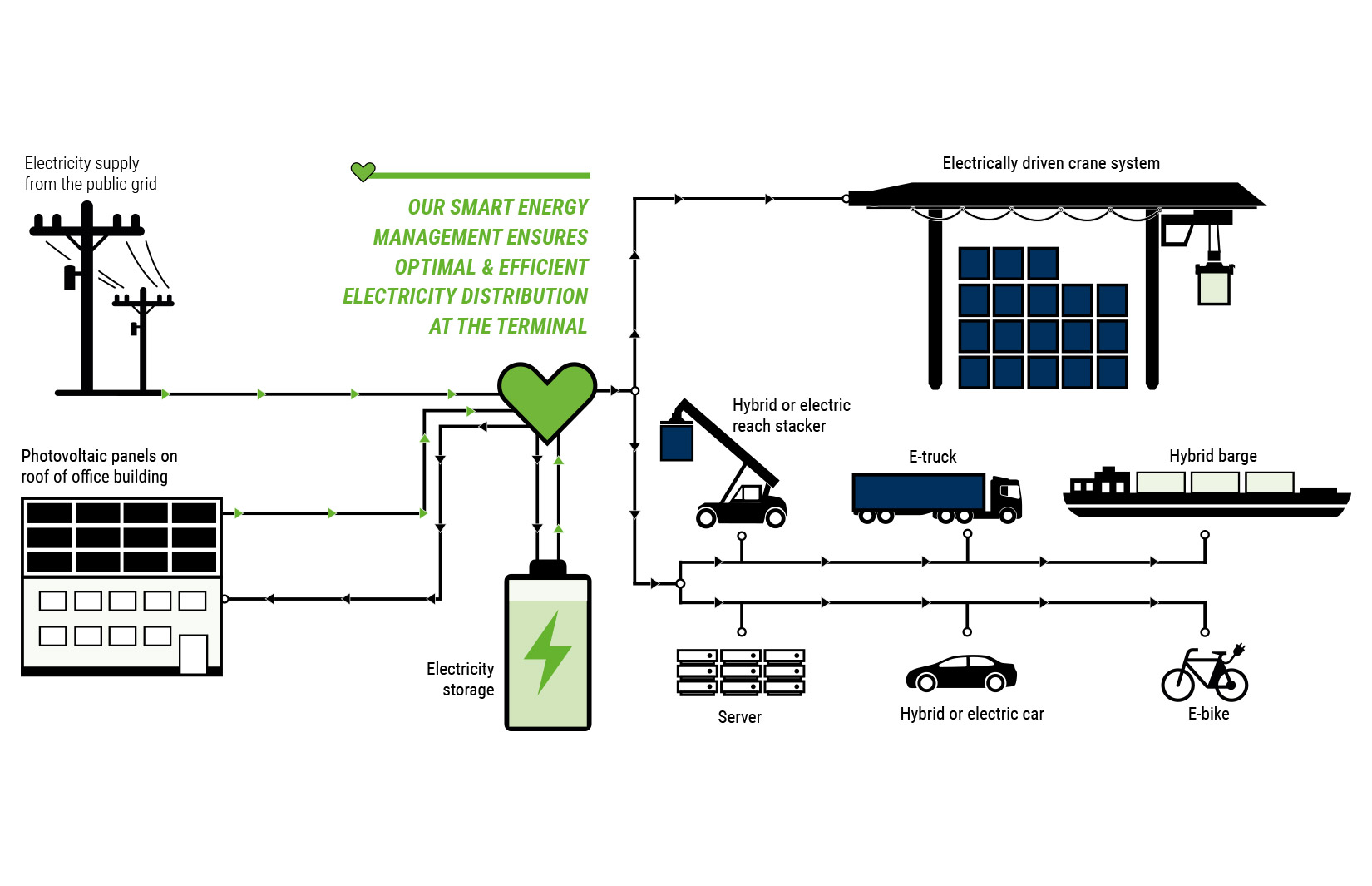
Smart energy flows through the wires at our CONTARGO terminals.
At our terminals, there are numerous electricity-intensive processes, such as the usage of cranes, as well as electricity producers, such as photovoltaic systems. To maintain a healthy and well-functioning electricity cycle at our sites, we manage our electricity flows in a targeted manner. It is important to us not only to use as much additional renewable electricity as possible, but above all to use it as efficiently as possible.
The procurement of the 90 e-trucks and the corresponding charging infrastructure is funded under the German "Richtlinie über die Förderung von leichten und schweren Nutzfahrzeugen mit alternativen, klimaschonenden Antrieben und dazugehöriger Tank- und Ladeinfrastruktur" (KsNI) by the Federal Ministry for Digital and Transport. The funding guideline is coordinated by NOW GmbH, and applications are approved by the Federal Office for Logistics and Mobility.