Simply Mega: With the E-Truck from Wörth am Rhein to Amsterdam
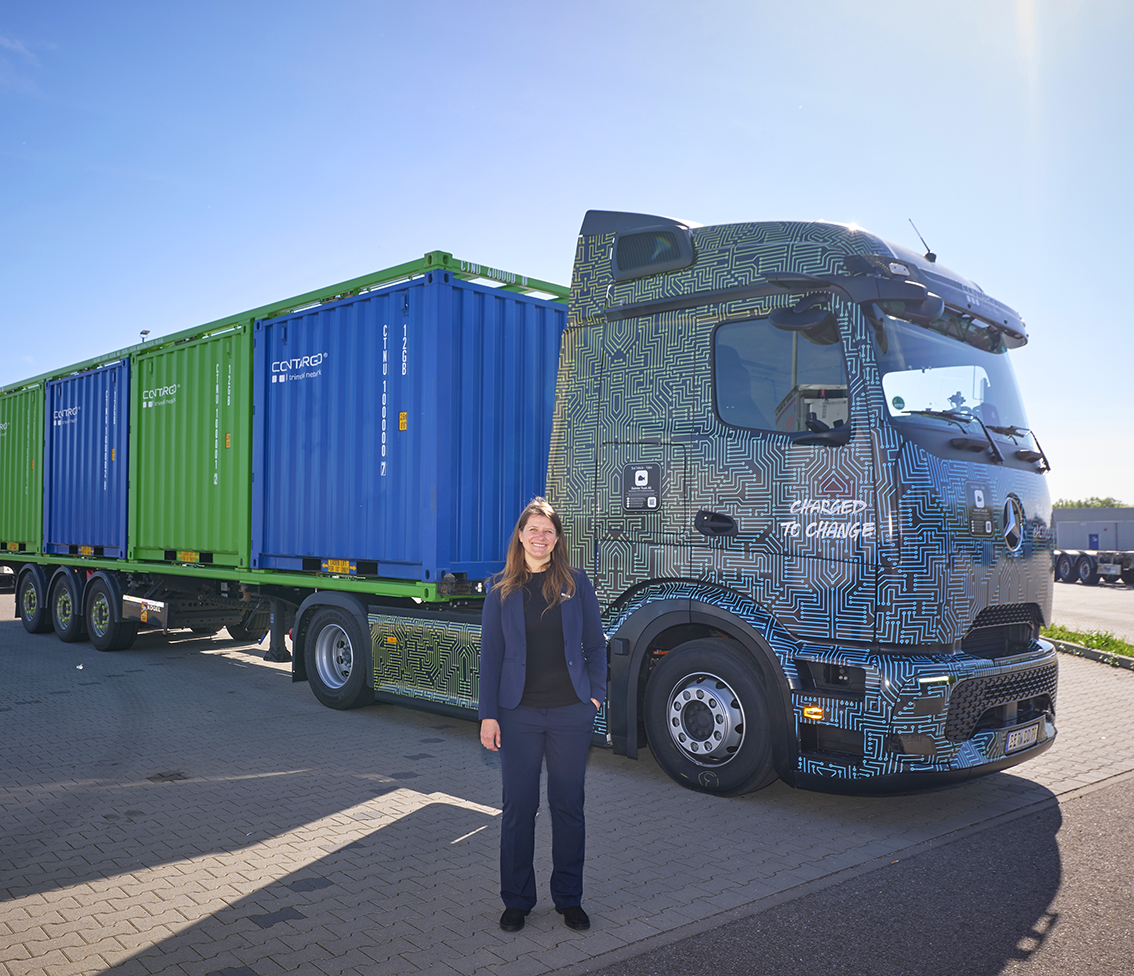
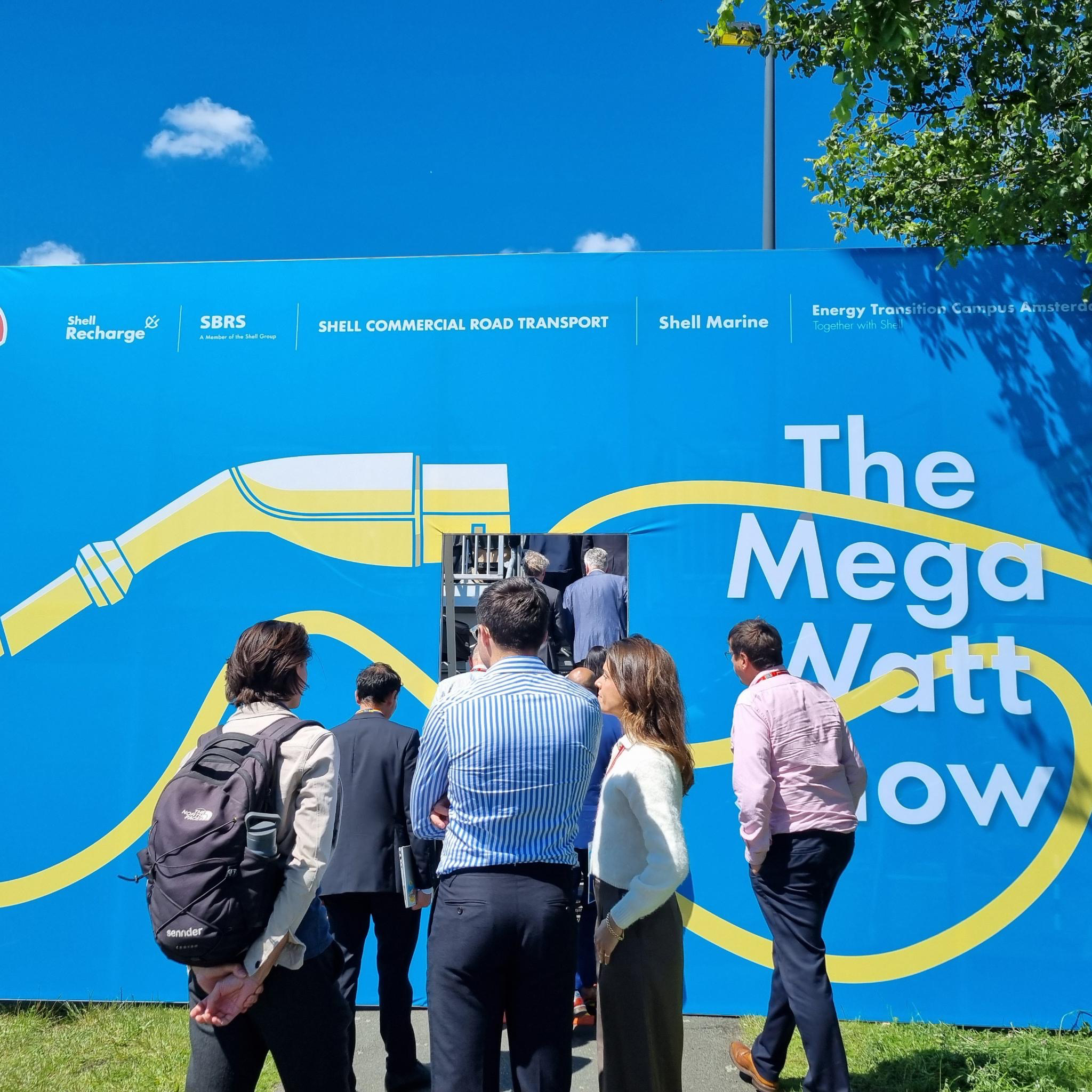
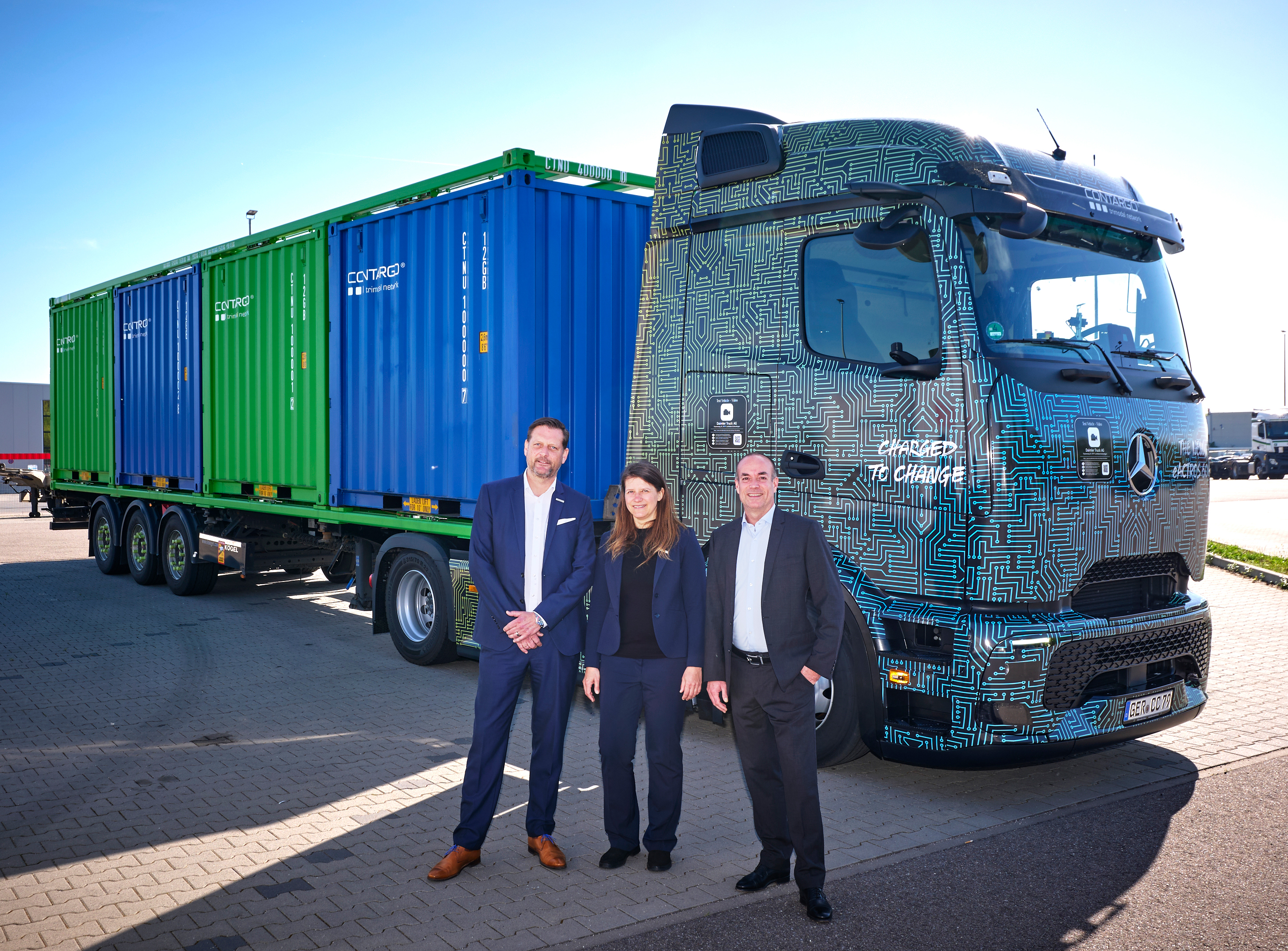
In the coming months, we will further electrify our local transport fleet and soon utilize 90 e-trucks across Germany. However, the more e-trucks are on the road, the more intriguing the question becomes of where the vehicles can be charged. One solution among many is megawatt chargers. Recently, when the Dutch oil company Shell commissioned its first self-developed megawatt charger at the Energy Transition Campus Amsterdam (ETCA), Kristin Kahl, Head of Sustainability at Contargo, and Daniel Röhm, a truck driver at Contargo, were present.
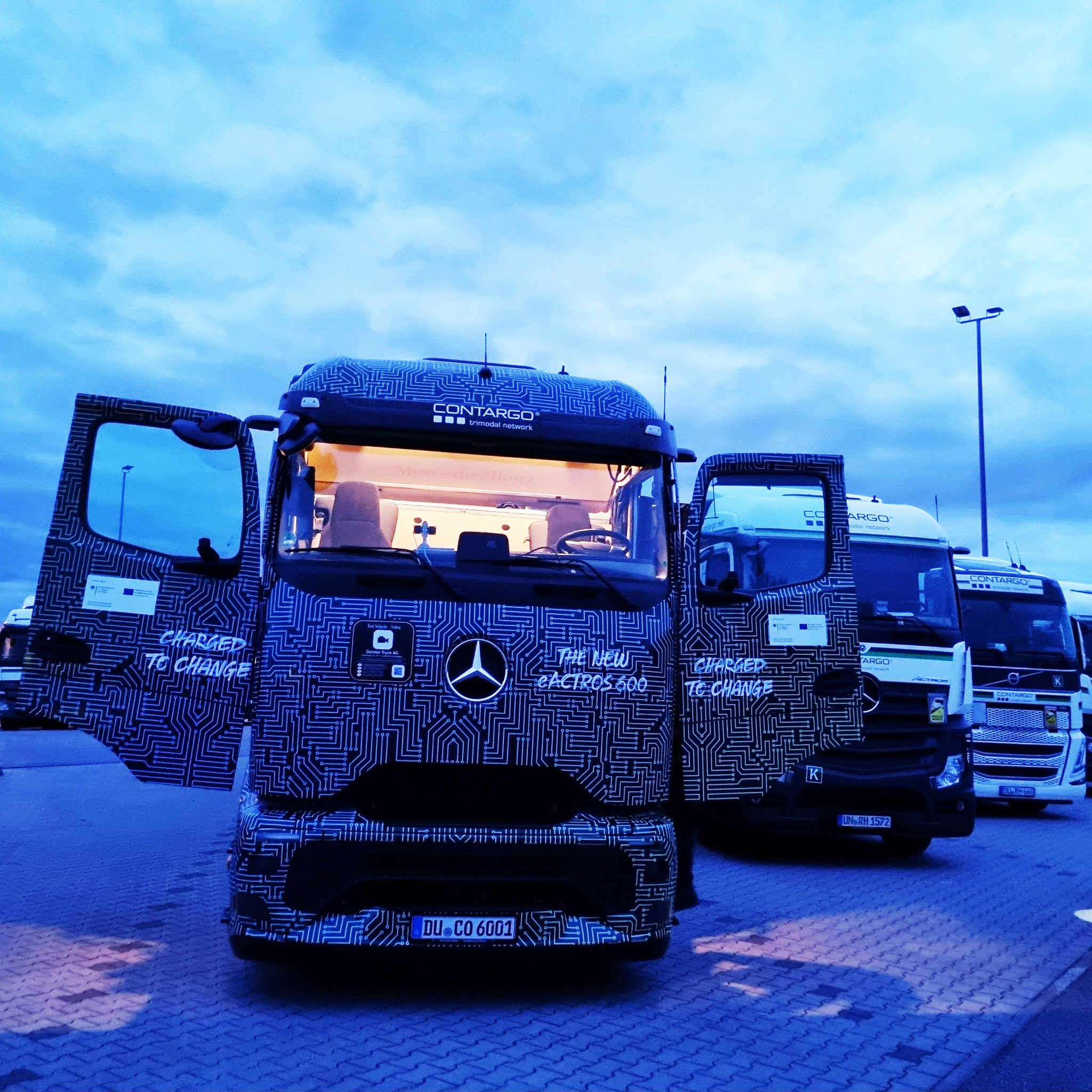
The eActros 600, which we are currently using in customer trials in Wörth am Rhein, was one of the first e-trucks to be charged at the megawatt charger. This required the truck to go on a long-distance trip for the first time, even crossing borders – a small adventure for everyone involved, which we would like to share with you through Kristin's logbook.
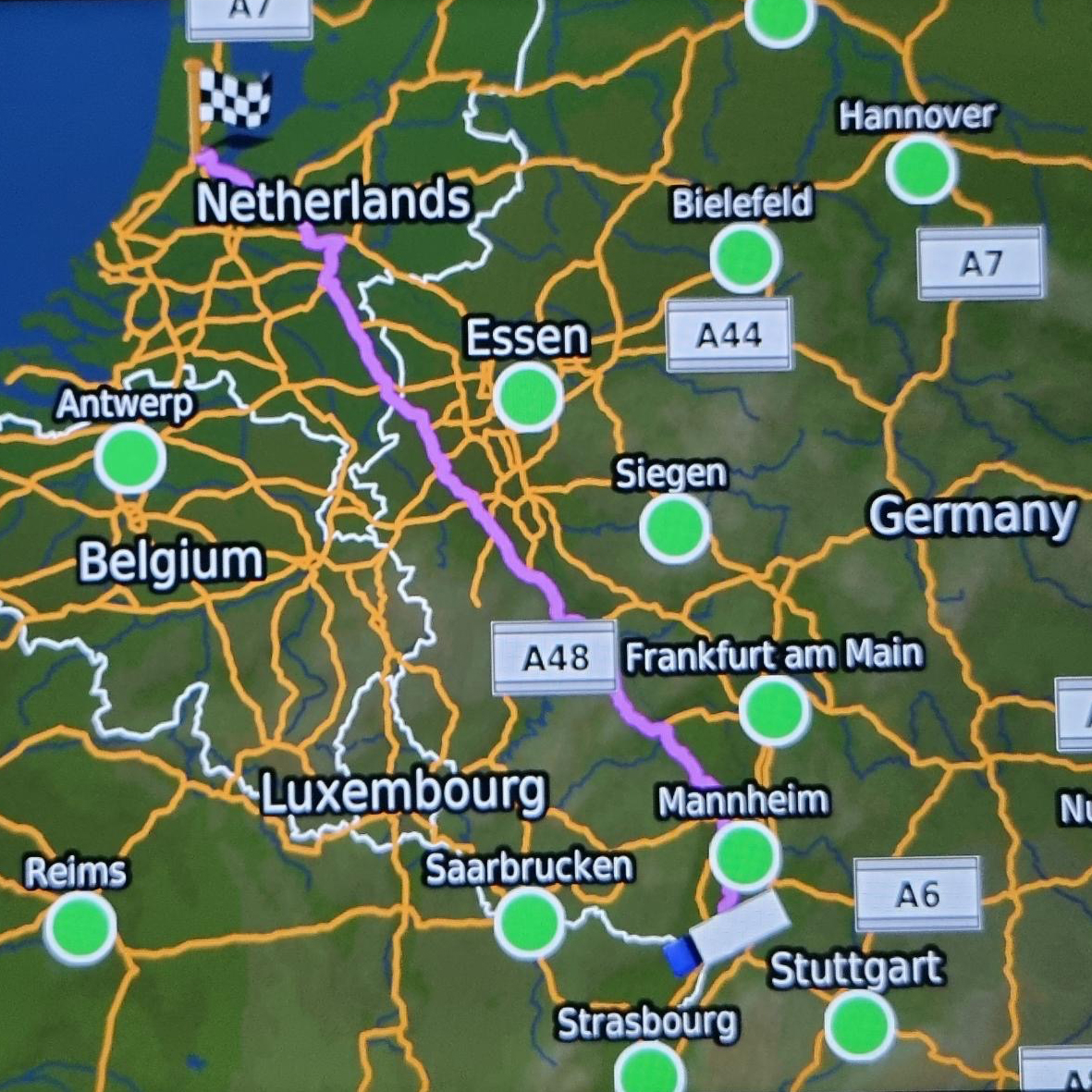
22:22 Start! We are sitting in the almost brand-new eActros 600. It delivers more than enough power for today’s total weight of only 26 tons with its 600 kW peak performance. The navigation system shows 544 kilometers to the destination, with a battery level of 96 percent. Off we go, onto the highway, cruise control set to 85 km/h. We quietly cruise along the roads.
Kilometer 120: First consumption check: 95.9 kWh/100 km.
Kilometer 180: The inclines increase, and the road is wet. Current average speed is 81 km/h, consumption is 107.4 kWh/100 km. The Moselblick rest area is announced. Battery check: 62% – easy! We drive past it relaxed.
01:06: 222 km behind us, current consumption 100 kWh/100 km, battery level 56 percent. Onward!
02:00: We have 1 km “extra” – theoretically, we could make it to the destination without an interim charge. But since the legally required break is coming up after 4.5 hours, we use the opportunity to charge.
02:20: Daniel had previously checked out all the fast chargers from 300 kW along the route. It was unclear whether he could reach them before the required break and whether he could get the e-truck close enough to the charging station. The first three targeted charging points can be passed. Fortunately, all stations are free at night, as shown by the app. It would certainly be different during the day.
02:45: 7 minutes before the mandatory driving break, we reach the selected charging station. It provides up to 300 kW but is actually designed for cars. Tap the card, plug in, and – break!
04:00: After a little over an hour of charging, the process stops. It was supposed to finish at 04:20, but the charging station overheated and shut down. Understandable after over an hour at nearly 300 kW, as it is a car charging station with an uncooled cable. Daniel has to restart the truck to continue charging. Eventually, nothing more goes in, the last two percent won't charge. Dawn is breaking, and traffic is increasing. We decide to continue driving.
04:45: Departure, battery level 98 percent, which could cover 610 km. Relaxed!
05:05: We cross the border. Yeah, “our” eActros is driving internationally for the first time! Cruise control set to 80 km/h. It's getting cool, Daniel turns on the air conditioning – surprisingly, it has little impact on consumption.
06:43: We hit rush hour traffic and the first traffic jam of this trip. 64 km to go to the Energy Transition Campus Amsterdam – we have enough buffer before the event starts.
07:30: Approaching downtown Amsterdam with partially 7-lane roads.
07:43: After almost 10 hours, we reach our destination.
First Megawatt Charging
Later, Kristin participated in a panel discussion with Hilmar van den Dool (Shell), Melissa Williams (Shell), and Ard-Jan Kooren (Kotug), and Daniel was able to drive the e-truck to the megawatt charger, which was inaugurated with the charging of an electric push boat and several e-trucks in front of a large audience.
This megawatt charger is a test setup. The system is equipped with two separate charging arms. One rotating arm is designed for electric ships, and the other supplies power to heavy e-trucks and buses. By placing a second adapter on each charging arm, the megawatt charger at ETCA is intended to accommodate a variety of ships, vehicles, and battery types. The goal is to establish a universal standard to avoid working with different cables or connectors.
The capacity of the megawatt charger is roughly equivalent to three regular 350 kW fast chargers, with which electric trucks are already being charged. E-trucks and buses with batteries up to 1 MWh can be charged within 2 hours there.
Contargo will mainly use megawatt charging outside of the legally required rest periods. During breaks, 600 kW is sufficient to almost fully recharge the battery in 45 minutes. For us, megawatt charging will be a piece of the larger charging puzzle. Currently, this puzzle only includes depot charging but will hopefully be supplemented in the future by further pieces such as charging at loading ramps and dynamic charging, enabling charging without time loss.
Kristin's Conclusion:
“With a driving time of almost ten hours at an average speed of 81 km/h and an eco-score of 86 percent, the consumption was 99.4 kWh/100 km. An impressive performance for an electric vehicle! But on the next trip, we would like to refuel at e-truck charging stations where the vehicle can easily approach the charging station and park. Then gladly again!”